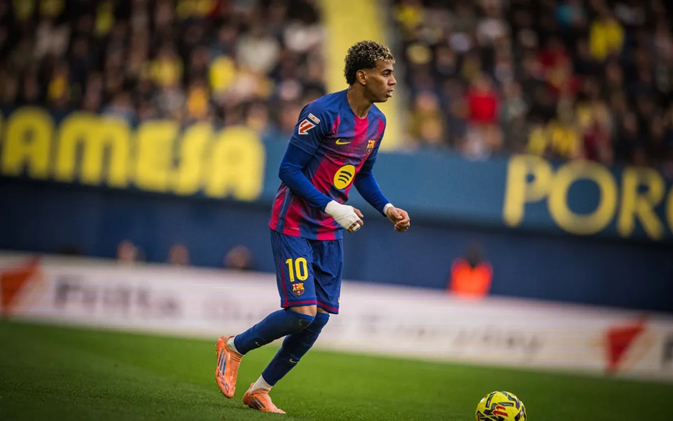
Lamine Yamal reached stages that most footballers spend years trying to access while he was still a teenager. Senior club football, international tournaments and decisive matches quickly became normal parts of his career. His technical ability explains why coaches trusted him, but talent is only one part of the situation. Early success also creates workload, public attention and expectations at an age when a player is still developing physically and mentally.
The speed of that rise creates an unusual environment. One match can produce praise and the next can trigger debate, making public reaction appear as unpredictable as the outcomes associated with live casino crazy time. For Yamal, however, long-term development cannot be managed through short-term reactions. The challenge is to separate what matters for his career from the noise surrounding each performance.
Why Yamal Became Important So Quickly
Young players often enter senior football through limited roles. They receive minutes late in matches, face reduced tactical responsibility and gradually adapt to the speed of competition.
Yamal followed a different path.
His ability to receive wide, beat defenders and create chances made him useful immediately. He was not selected only because of his potential. He could already solve problems that senior teams regularly encounter.
When opponents defend with compact lines, a winger capable of winning a one-on-one can change the structure of an attack.
If a second defender moves across to help, space appears for teammates. If no support arrives, Yamal can continue toward the penalty area.
That tactical value accelerated his transition from prospect to regular contributor.
Being a Teenager Does Not Reduce Tactical Responsibility
Once a player becomes a regular starter, opponents stop treating him as a development project.
They analyze patterns.
Defenders study which foot he prefers, when he cuts inside, how he reacts to contact and where he tends to pass after attracting pressure.
Yamal therefore faces the same tactical preparation as established attackers.
This forces him to develop alternatives. If defenders prevent the inside route, he must be able to continue outside. If two opponents close him down, he needs to release the ball before possession becomes trapped.
His development is already occurring inside competitive matches rather than away from them.
That creates opportunity but also reduces the margin for experimentation.
Physical Development Creates a Workload Question
A teenage footballer is not simply a smaller version of an experienced professional.
The body is still developing, while the competitive calendar can include domestic matches, international games, travel and training.
Managing workload therefore becomes important.
The objective should not be to prevent Yamal from playing difficult matches. Those experiences contribute to development. The challenge is controlling the accumulation of minutes and ensuring that short-term sporting needs do not dominate every decision.
Fatigue can affect more than sprinting.
It can influence decision-making, coordination and recovery between matches. A winger who repeatedly accelerates, changes direction and absorbs contact may experience a different physical load from a player whose role requires fewer explosive actions.
Fame Changes the Environment Outside Football
Yamal’s challenge does not end when a match finishes.
Early fame creates attention around interviews, social media activity, relationships, celebrations and ordinary decisions that would receive little notice if made by another teenager.
This changes the development environment.
A poor match can become a public discussion. A photograph can generate stories unrelated to football. A comment can be interpreted as evidence about personality or professionalism.
Experienced players often spend years learning how to manage this attention.
A teenage star has to learn while already being watched.
The people around the player therefore become important. Coaches, family and professional advisers can help separate decisions that affect performance from stories that simply generate attention.
Comparison Can Distort Expectations
Football tends to understand young talent through comparison.
A teenage attacker who performs at senior level is quickly compared with former stars who played similar positions.
Such comparisons create simple narratives, but they can distort development.
Two players may share technical characteristics while having different physical profiles, tactical environments and career paths.
Yamal does not need to reproduce another player’s trajectory for his career to succeed.
The more useful question is whether he is improving the skills required for his own role.
Can he make better decisions against double coverage? Can he influence matches when dribbling opportunities are limited? Can he maintain output while opponents adjust?
Those questions provide better measures of progress than comparisons with careers that have already been completed.
Failure Must Remain Part of Development
Early success can create the impression that every season should produce continuous improvement.
Football rarely works that way.
Young players experience periods of poor form, tactical problems and physical fatigue. Opponents adapt, while coaches may change systems or responsibilities.
For Yamal, the ability to experience these periods without every setback becoming a crisis will matter.
A teenager who believes every unsuccessful action threatens his status may become more conservative. That would be particularly damaging for a winger whose role requires risk.
Dribbling means accepting that possession will sometimes be lost.
Creative passing means accepting that some attempts will be intercepted.
Development requires enough freedom to make those mistakes while learning which risks are worth taking.
His Tactical Evolution Will Determine His Ceiling
Yamal’s current strengths are already clear, but the next stage of his career will depend on how his game expands.
Opponents will continue developing methods to reduce his influence.
Some will defend deeper. Others will use two players against him or deny passes into his preferred receiving zones.
He will need solutions that do not depend entirely on beating the first defender.
Combination play, movement without the ball and improved positioning inside the penalty area can make him dangerous even when defenders restrict his dribbling.
That evolution could also reduce physical demands because not every attack would require repeated acceleration with possession.
Protecting the Player Without Limiting the Footballer
The central challenge around Yamal is balance.
Treating him as an ordinary teenager would ignore the level he has already reached. Treating him only as a football asset would ignore the fact that development continues after a player becomes famous.
He needs competition, responsibility and difficult matches because those experiences can improve him.
At the same time, workload management and a stable environment can help ensure that immediate success does not become the only priority.
Yamal’s early career shows how quickly modern football can turn a teenager into a global figure. The harder task begins after that transformation.
Remaining successful will depend not only on how many defenders he beats or goals he creates, but on whether his development can continue while expectations grow around him. Early fame has already changed his career. Managing it may determine how far that career eventually goes.