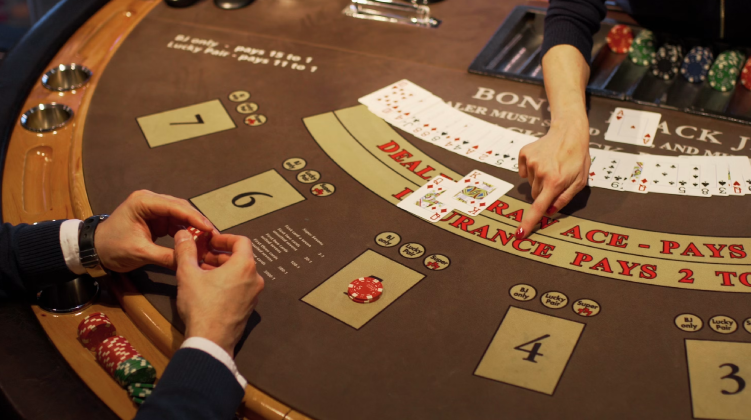
A dealer sliding cards across felt at 2am looks no different on camera than one doing it at lunchtime, which is exactly the point studios engineer for: viewers should never notice the gap between a fresh crew and a crew four hours into a rotation. Behind that calm sits a shift schedule built more like an airline crew roster than a casino floor, with rotations timed to the exact minute traffic spikes across three or four time zones at once.
Studios such as those streamed on x3bet casino run blackjack pits around the clock, which means a dealer’s actual working life is closer to a call center agent’s than to the tuxedoed image most players carry in their heads. Blocks run short on paper but stack tightly in practice, with a floor manager watching every feed for the first sign of a yawn or a slumped shoulder eight hours into the day. A single dealer might handle four different tables over one shift, each with its own camera angle, its own supervisor, and its own pace of play.
The Rotation Nobody Sees on Stream
A typical studio splits the day into three eight-hour blocks, but dealers rarely work a full block on one table. Most operators rotate staff every 20 to 40 minutes between blackjack, roulette, and baccarat pits, both to reduce repetitive strain and to keep dealing speed consistent when fatigue would otherwise slow the count.
Break rooms sit metres from the studio floor, not the other side of the building, because a dealer stepping away is instantly replaced by a colleague who has been watching the same table on a monitor for the last ten minutes. That handover has to happen inside 90 seconds or the stream shows an empty chair, which studios treat as a hard failure on their internal scorecards.
The Morning Block
Morning shifts, usually 6am to 2pm local time, chase European traffic waking up and Asian traffic still active from the night before. Tables often run at 70–80% occupancy, so dealers on this block get less idle time between hands and are rotated more frequently to manage voice fatigue from constant talking.
The Night Block
Night shifts flip the traffic source: North and South American players dominate, and volumes on mid-stakes tables can double compared with the same slot 12 hours earlier. Studios schedule their fastest dealers here specifically because faster hand resolution keeps bet-timers from running out during busy stretches.
| Shift block | Local hours | Typical table load | Rotation frequency |
| Morning | 06:00–14:00 | 70–80% | Every 20–30 min |
| Afternoon | 14:00–22:00 | 50–65% | Every 30–40 min |
| Night | 22:00–06:00 | 80–95% | Every 15–25 min |
What Keeps a Dealer Camera-Ready for Eight Hours
Lighting rigs in most studios run at 5600K colour temperature, close to overcast daylight, chosen because it flatters skin tones on compressed video streams without washing out card faces. That single technical choice shapes a surprising amount of a dealer’s routine, down to which shades of lipstick studios stock in the makeup station.
Voice work matters just as much as appearance. Dealers narrate every action out loud for accessibility and for players relying on audio cues, so studios train staff to hit a specific pace: roughly 110–130 words per minute, slow enough to follow, fast enough that a table doesn’t stall. New hires spend two full weeks on scripted drills before touching a live table, and most studios run a written vocabulary test alongside the practical one, since a mispronounced payout term on stream generates support tickets almost immediately. Consistency across a shift depends on a handful of habits studios actively enforce:
- Mandatory five-minute breaks every 45 minutes, tracked automatically by the table management system.
- Rotating between at least two games per shift to avoid repetitive wrist strain from constant shuffling.
- A supervisor floor-walk every 20 minutes checking card visibility, chip stacks, and dealer posture on camera.
Pay structures reflect the intensity too. Night-block dealers, who face the highest table loads and the fastest hand pace, typically earn a shift differential of 10–15% over daytime rates at the studios that publish their internal pay bands, and seniority on the fastest-moving tables is treated as a promotion rather than just a scheduling preference.
The result is a job that looks glamorous for a three-second glance and reads, up close, like a tightly engineered production line where every 20-minute block is scripted almost as precisely as the cards themselves. A new dealer’s first solo shift is usually shadowed by a floor supervisor sitting just off-camera, ready to step in if a hand resolves incorrectly or a player dispute needs an immediate human decision rather than a scripted response.